
Westminster is asking the wrong question about AI
It's not how to govern it. It's whether you can govern at all

If there’s one question I get asked more than any other, it’s: do you really wear that on TV? But a close second is: what’s your angle?
I must admit, I dislike this question. Although it’s usually meant honestly, as a way of working out the subject of a story, to my ears it always sounds like an accusation. But of course I know what people mean, so I respond politely and say: the one thing I’m not that interested in is whether AI is real. It’s incredibly real. I’m interested in what that means.
To me this is just the truth, so obvious as to barely need stating; nevertheless it’s far from universally accepted. Lots of journalists and politicians are half-expecting AI to go away or stop getting better. And even if they accept its importance, it’s only as something else that needs governing, rather than a challenge to governing itself.
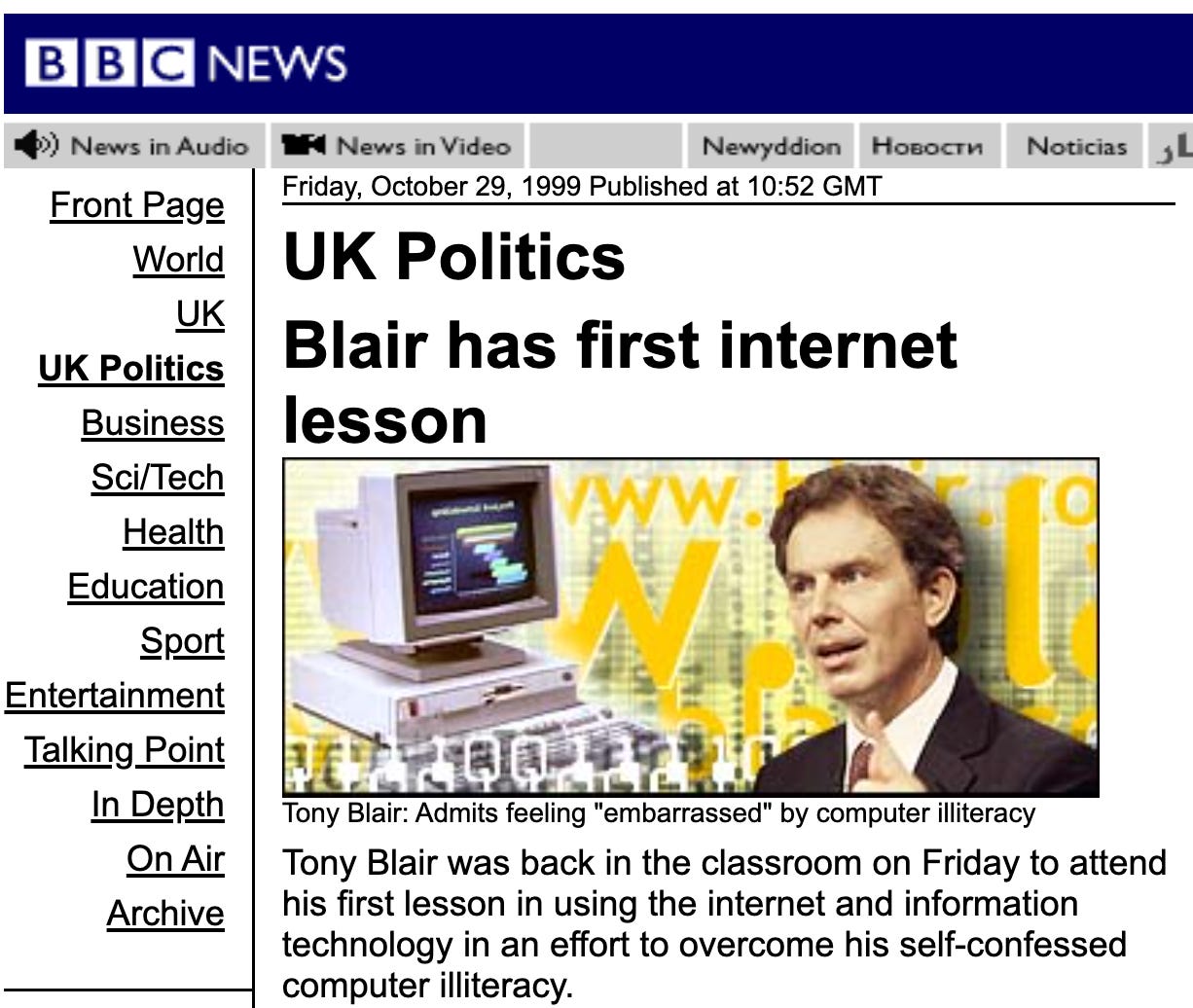
Which brings me to Tony Blair’s 5,700-word essay, which dominated the news for several days last week, forcing a lengthy response from every would-be Labour leadership candidate up to and including the Prime Minister.
Part of Blair’s essay was about AI – “There is no point in debating whether this technological revolution is a good or bad thing,” he wrote. “Just know it is a ‘thing’. In fact, it is ‘the thing’” – and ostensibly the debate it prompted was too. Except, in practice, it wasn’t. Instead, it was a competition to see who could fit AI into their grand political story.
For Blair, the story was (as always) modernisation and Atlanticism. For Starmer it was dignity and respect. For Burnham it was community and place. For Streeting it was democracy and inequality.
In this way, the candidates seemed to be trying to answer the question which – it is universally agreed – is central to this race. Starmer, it is agreed, is floundering because he has no political project. The question therefore becomes: what is my political project and how does it make sense of AI?
From everything I hear about life in Downing Street, there is a large element of truth to this characterisation. As a former Downing Street official told me shortly after they left: “Starmer doesn’t like trade-offs.” Seems like a disadvantage for a prime minister!
But did Starmer really have no political project? Look back at his statements before and after coming to power and he expresses a very clear project: the return of competent managerialism. That’s why all those commentators celebrated his election by saying “the grown-ups are back in charge.”
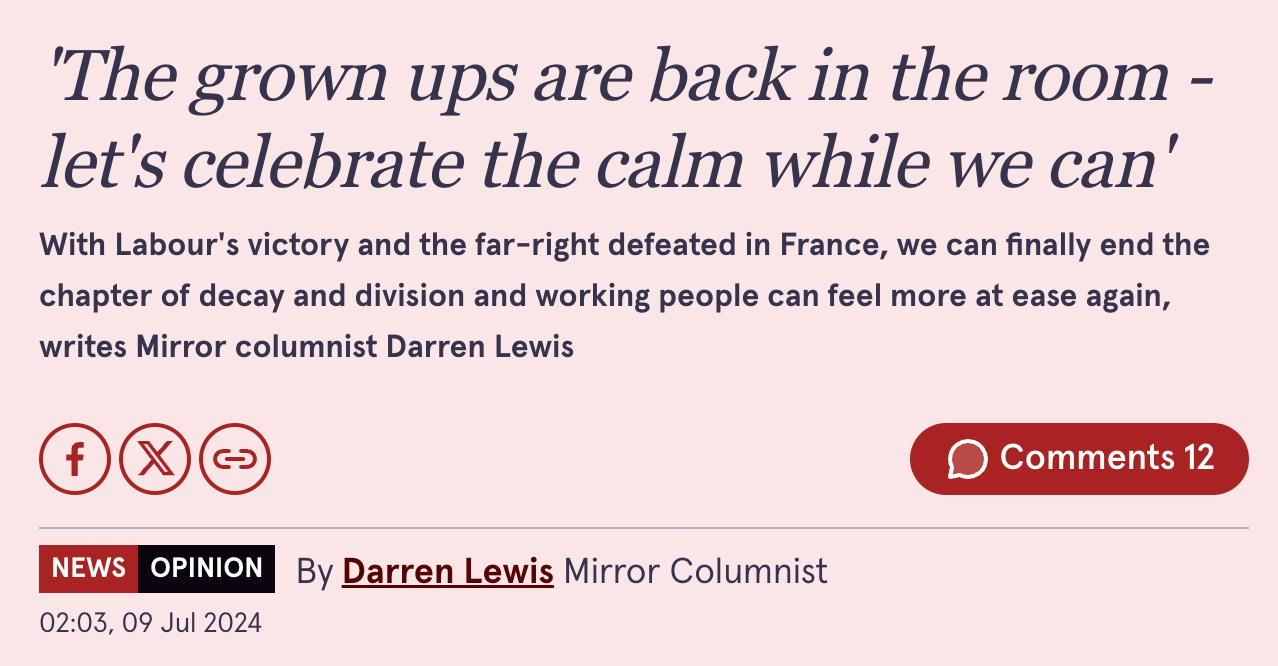
The problem is not that Starmer, like his predecessors, had no political project. The problem is that political projects collapse when they hit the reality of the British state.
As Sam Freedman puts it in his book Failed State:
The initial crises of the British state were ones of democracy; the mid-century ones were those of social conflict; and the 1970s and 1980s of economic upheaval. The one we are in now is a crisis of governance.
That’s why the debate about Blair’s essay felt so unsatisfying. Not because politics is irrelevant to AI – not at all – but because it failed to connect to the level at which the emergency is likely to arrive.
AI is above all a challenge to governance. And that challenge is going to begin by making it harder to govern.
To see what I mean, here are five questions which AI poses to the British state and anyone who aspires to run it. Starting with the most straightforward:
1. What if AI supercharges cybercrime?
Serious cybercrime cost the UK an estimated £14.7 billion – around 0.5% of GDP – before the arrival of AI. What will happen if that doubles? Or increases by a factor of 10? Given the jump in cyber capacity and its speed of diffusion a leap of this size is not out of the question. Ditto fraud, which in 2023-24 cost the UK economy an estimated £14.4bn.
Yes, you might say, but we will have AI for defence too. Will we? The governor of the Bank of England confirmed last week that British banks still don’t have access to Mythos. I was told a story recently about another central bank which, after weeks of pleading, finally secured a meeting with Anthropic. The bank sent its top team. Anthropic did not and were not able to provide access to Mythos. Instead, I’m told, they offered Claude Security, a product based on Opus 4.7, a model which cyber evaluations put noticeably behind Mythos.
Mythos is reportedly being made more widely available this week, but the point is clear – getting access to these models ahead of time is not something you can take for granted. As the government’s former AI advisor Matt Clifford sometimes says: “Sovereignty these days is downstream of having a trillion dollar company in your country.”
2. What happens when AI causes a deluge of demand
Many public services only survive because they are rationed by inaccessibility and inconvenience. What happens when appeals, complaints, FOIs, benefit applications, immigration submissions, planning objections, tribunal claims, school admissions disputes, benefit claims, parking appeals, ombudsman cases, litigation and court appeals all suddenly become much easier?
One person who should know is Tom Loosemore, who helped set up gov.uk in 2010 and now leads Public Digital, an influential consultancy devoted to digital government. As he recently put it:
I don’t think governments are remotely ready for the coming explosion in demand for their services driven by AI agents… Even popular stuff like Delay Repay is doomed; you might as well scrap it now and take the pain before the whole thing messily melts down.
Is anyone thinking about this apart from Tom?
3. What happens if services becomes a module in Claude?
You wouldn’t need a collapse in white-collar work to produce an effect on the order of Brexit. All you would need is a certain percentage of people bypassing UK firms to buy answers directly from model providers. But when services account for 81% of total UK economic output and 83% of employment, how many percentage points do you need to shave off before you have a full-blown crisis?
4. What happens if there’s war?
War today is fought with software as well as weapons. The UK has ambitions in this area, but they are being held up by lack of funding. Even if there isn’t an outright war, you will still need this kind of system for an effective defence.
And then of course there are the risks from AI bioterrorism, drone attacks and the like. And the unreliability of our essential allies, who now include not just nations such as the US but individuals like Elon Musk.
5. What if the labs actually do it?
Anthropic co-founder Jack Clark recently put the chance that AI systems would be able to build a better version of themselves in the next two years at greater than 60 percent. I’m no expert but to me this doesn’t sound outlandish.
What would the UK do if that really did happen? Set up a Royal Commission to report back? Debate whether it conforms to GDPR? I don’t agree with the idea that these powers are akin to nuclear weapons, but I could be wrong. That seems worth taking extremely seriously.
What’s at stake
One odd feature of the debate that followed Blair’s essay was how often the responses featured the 2008 financial crisis. Nearly every leadership contender and commentator dwelt at length on it or the era of globalisation that supposedly preceded it. My old colleague Lewis Goodall for instance. Or former Brown advisor Stewart Wood:
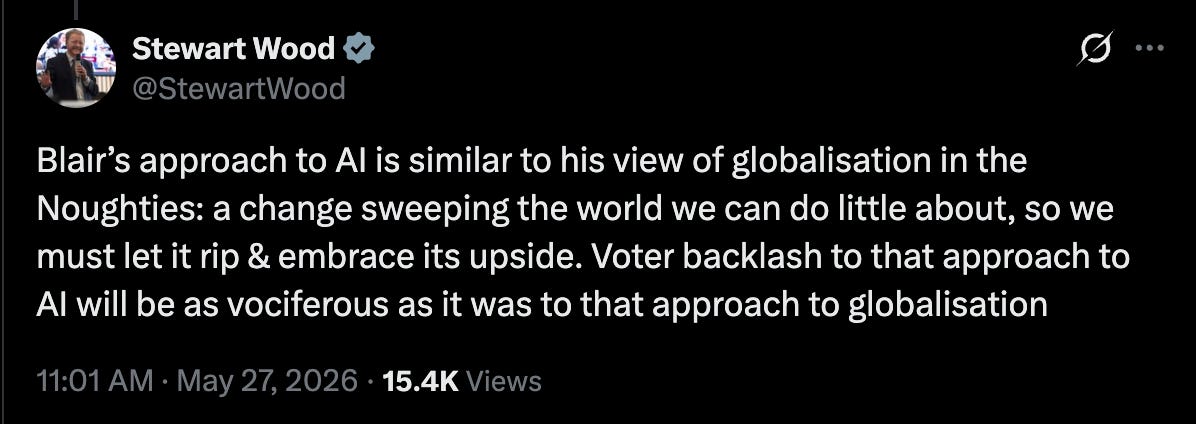
But, as an analogy, globalisation is flattering. It assumes we have decades to think about the problem and a state in a rough shape to respond to it. It assumes traditional political economy is a useful guide.
In tech, people often reach for a different analogy: the pandemic. It’s partly the exponential growth, of course, but it’s also the nature of the crisis: fast-arriving, constantly mutating, an assault on every front. An emergency in which the real question is not what should you do but what can you do?
That seems to me like the question our politicians should be asking.
Very much appreciate your weekly full-spectrum guide to AI’s reality. A key qualifying-question for any politician should be “Do you truly live in the modern world?”
DILLIGAF?IDO recommend you.